Dragon Age: Origins (Dragon Age: Origins review) came out in November 2009 from BioWare and sixteen years later it is still one of the games I keep coming back to. I am writing this dragon age origins review after 250 hours on PC, six playthroughs, and always on the hardest difficulty. The verdict is clear: it still holds up, even when the graphics age and the party sometimes frustrates you.
Game info
Dragon Age: Origins is a fantasy RPG from a third-person view with real-time combat and the option to pause. You play as your own Grey Warden, whom Duncan recruits into the order and sends to save Ferelden from the darkspawn and the Archdemon.
The world of Ferelden is split by a world map, locations inside regions, and camps between missions. You pick up quests from the journal, from NPCs, and from random encounters on the road. The main line runs through Ostagar, Lothering, Redcliffe, Orzammar, and Denerim, and side content is shorter than in modern open worlds.
The game launched on PC, PlayStation 3, and Xbox 360. Today you can still get it on Steam, on GOG, or in the Ultimate Edition with the Awakening expansion. The main story takes roughly 30 to 50 hours, depending on how many side quests and personal companion arcs you finish. A more detailed estimate by play style is in playtime.
What the game offers
The biggest draw is a story with choices that feed into the finale, the coronation, and the fates of your companions. Every playthrough starts with a different origin by race and class, so the opening hours look different even when the paths join later.
The second strong side is the party. Eight characters with their own quests, romance arcs, and reactions to your decisions. Combat runs in a four-person group, and in camp you tune gear, runes, and tactics.
Do not expect from today’s RPGs a smooth action fight with no pause, a huge map full of icons, and photorealistic graphics. Origins is more a classic BioWare RPG with dialogue, moral choices, and tactical combat where you have to watch your party makeup.
My experience
I have finished the game about six times and I have been playing it since childhood. In the stats I have around 250 hours on PC, always on the hardest difficulty (Nightmare). Because of that I had to tune the character build and the companions carefully.
One playthrough with everything takes about 40 hours. You can finish the main story and most side quests without grinding the same fights. Side content is not rich, but each origin and another class invites you to another run.
Most often I played a human as a knight, a rogue, or a mage. I do not switch races much, I usually stick with human. What I enjoy most is seeing a different opening quest again and different NPC reactions. For me Origins is not one game among many, it is a classic I return to when I want a story.
Story
You start as a recruit among the Grey Wardens led by Duncan. After the disaster at Ostagar you are left almost alone and you have to gather allies through the old Warden treaties. A more detailed overview of the main line without the finale is in the article what the story is about.
The story mixes kingdom politics with personal companion arcs. Loghain, Anora, Orzammar’s claims, the crisis in Redcliffe, all of it builds into the final battle at Denerim. The tone is darker than in later games, the world feels serious, and most big decisions have consequences in the epilogue.
BioWare showed here that it can write a long path with a clear goal and still let the player decide who survives, who sits on the throne, and how the individual regions end up.
Who we fight
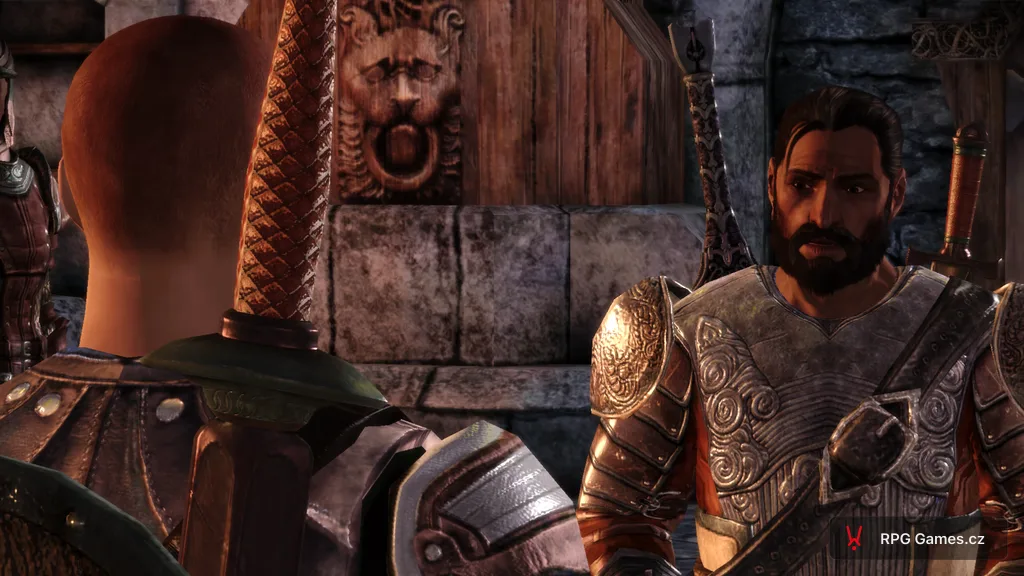
Ferelden faces the Fifth Blight. Darkspawn pour from the Deep Roads and the Archdemon leads them. They ravage villages and fortresses, and the whole plot points toward the final battle at Denerim.
The Grey Wardens exist because of the Blight. They know only killing the Archdemon ends it. That is why Duncan recruits you into the order, and after Ostagar you go gather allies under the old Warden treaties.
The goal of the game is clear. Reach the Archdemon before the darkspawn crush the whole kingdom.
Choices, endings, and consequences
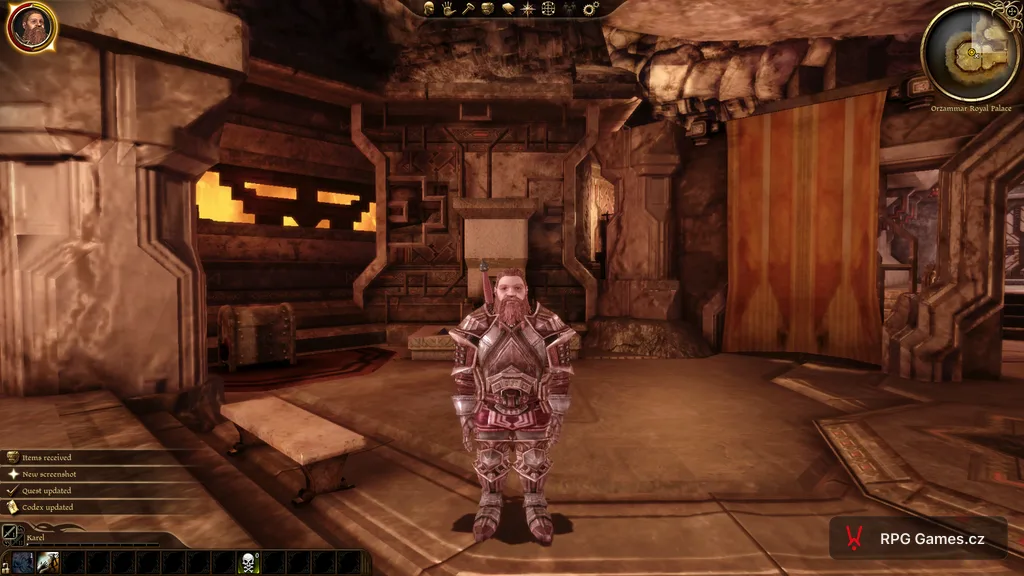
Choices are not just dialogue color. Decisions in quests change relationships in the party, who helps you in politics, and how the coronation turns out. Alistair, Anora, or a combination you set up during the game can sit on the throne. Some paths need finished companion quests and the right conversations in the finale.
Companions react to your answers, gifts, and moral choices. Romance arcs are mutually exclusive, only one can be active. You can romance Alistair, Morrigan, Leliana, or Zevran, depending on gender and how the game goes.
I have played it different ways. What I enjoy most is watching how the same quest ends with another party and another hero on the throne. The epilogue after you finish sums up the fates of regions and characters, so a second playthrough makes sense even without new content.
Character
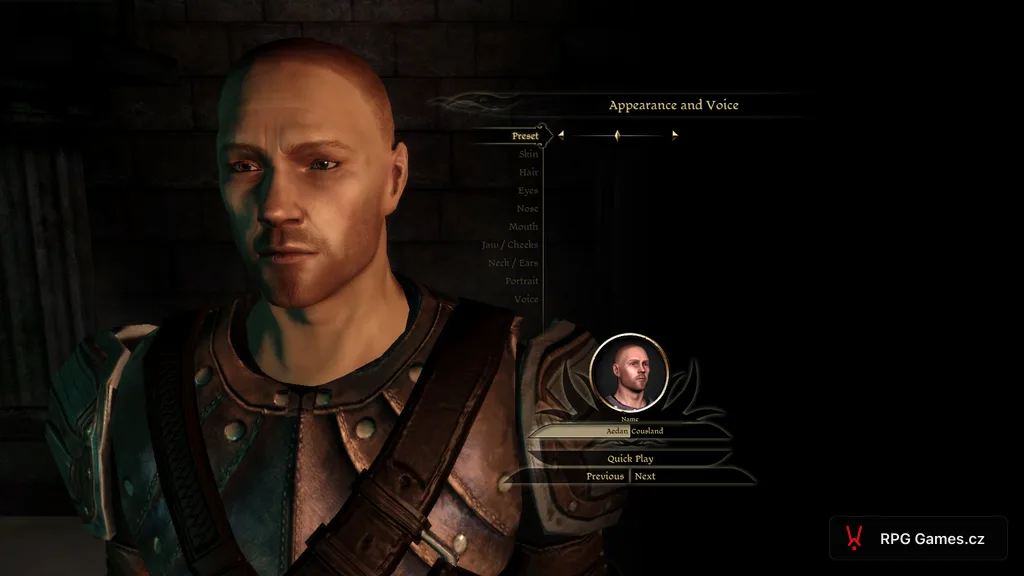
You create the hero yourself. You pick race (human, elf, dwarf), class (warrior, rogue, mage), and appearance. The combination sets one of six origin stories at the start of the game.
| Race | Class | Origin (brief) |
|---|---|---|
| Human | Warrior / rogue / mage | Noble from Lothering |
| Human / elf | Mage | Circle apprentice |
| Elf | Warrior / rogue / mage | Exile from a forest clan |
| Elf | Warrior / rogue / mage | City elf from Denerim |
| Dwarf | Warrior / rogue / mage | Noble from Orzammar |
| Dwarf | Warrior / rogue / mage | Casteless from Dust Town |
Later you unlock specializations by class and you spend points into attributes and skills.
Friends and companions
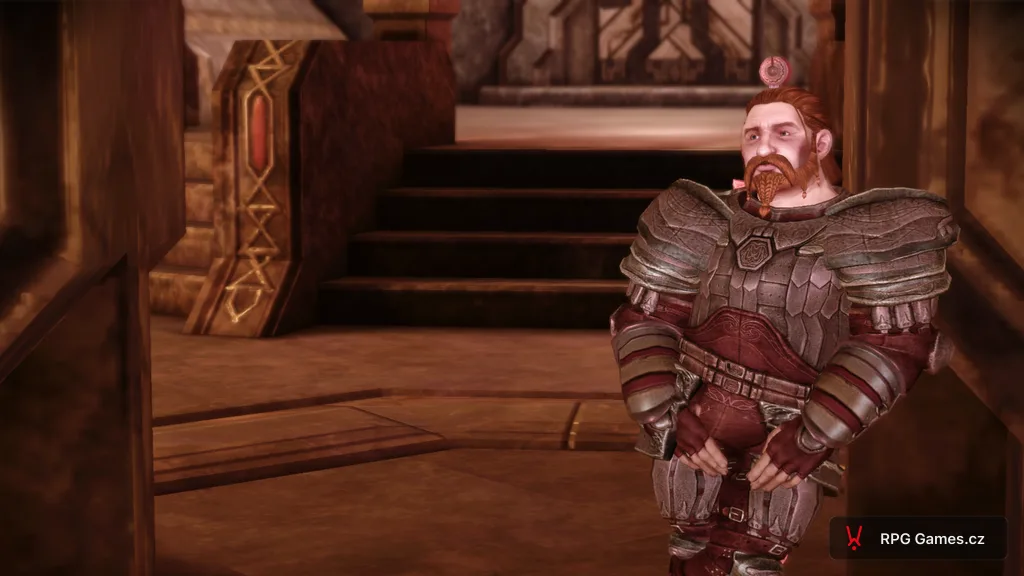
The game stands on companions. You can have four in the party including you, the rest wait in camp. Each has a personal quest, camp dialogue, and reactions to your choices on missions.
Alistair is a sarcastic fantasy buddy, Morrigan a cynical witch from the Wilds, Leliana a former bard with faith in the Maker, Sten a qunari soldier with foreign logic, Wynne an older mage, Oghren a drunk warrior, Zevran a hired assassin, and Shale a golem with a sharp tongue.
You can romance Alistair, Morrigan, Leliana, or Zevran. Relationships grow through talk, gifts, and time together in the party. Most arcs exclude each other, so you have to choose.
Game systems
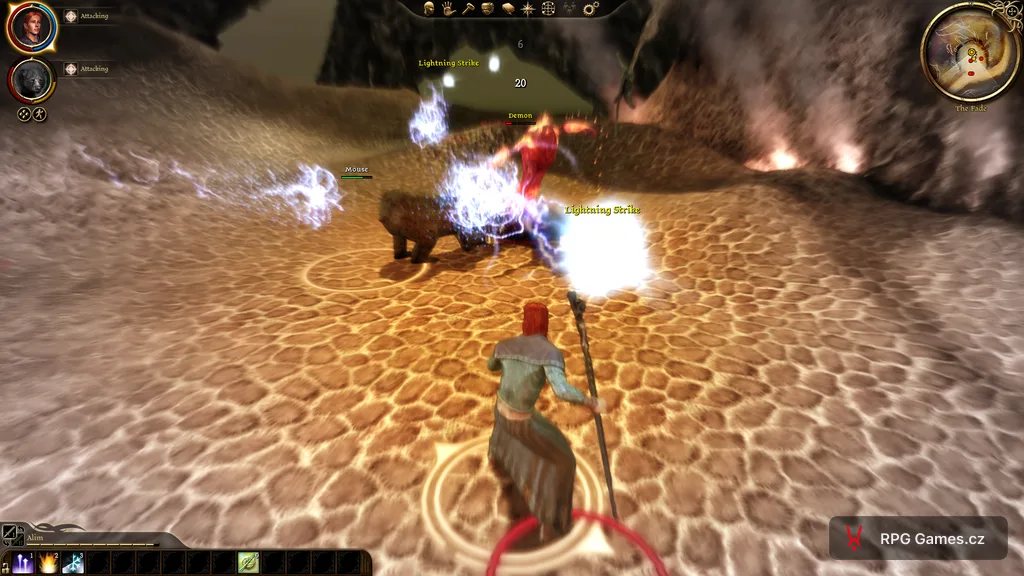
Combat runs in real time, and you can pause anytime and hand out orders. You switch between characters, set tactics, and use skills by class. The warrior holds the line, the rogue flanks, and the mage throws spells into the crowd.
Difficulties are Normal, Hard, and Nightmare. Enemies keep pace with your level, so the game on the hardest preset stays tough through the whole plot. In camp you upgrade armor and weapons at the blacksmith, runes at the enchanter, and you craft potions.
Progress comes from quests and from fights. You spend points into attributes and the skill tree, and mages also have mana. The world map links regions, early on random groups often ambush you on the roads, and later travel mostly slows the pace.
How hard it plays
The gap between difficulties is huge. On Nightmare you have to tune gear and companions and carefully choose who goes into the party. Enemies keep pace with your level, so the challenge stays consistent.
What tends to feel duller are transitions between camps and going back to old locations. Early in the game ambushes on the world map while traveling bother you the most. After a few hours you already know what to expect from the party.
Graphics
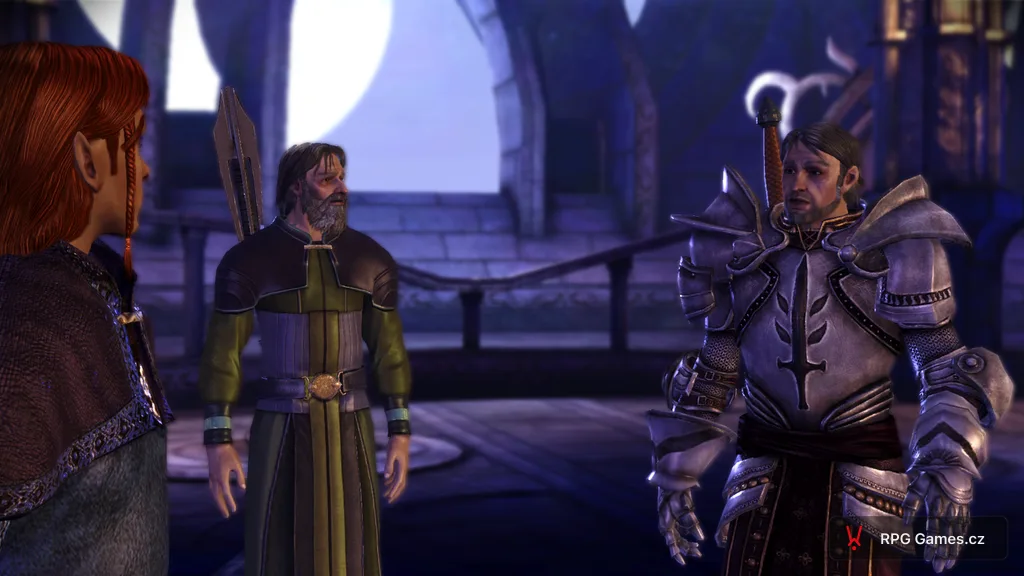
Graphics are Origins’ weakest side. It used to be enough, I played for the story and the party. Today on a modern setup you see right away that the game came out in 2009 and never got a remake or a next-gen patch.
Spell effects and characters in dialogue still hold up okay. Cutscenes still have something to them.
Against games from the last few years it is clearly older. Textures, combat animations, and the interface feel dated, and that is fine.
That is expected and you count on it if you want to play a game from 2009.
Music and sound
Inon Zur composed the music and it still works in Ferelden. Regional themes, combat tracks, and quieter camp passages keep the fantasy tone. Combat effects and ambient fit the darker world.
English voice acting is top tier for its time. Alistair, Morrigan, and Leliana have performances that still help glue the party together. After finishing, what stays in my head most are the musical themes from Ostagar and the final battle.
Localization and language
Official Czech is missing. The game offers English voice acting and subtitles in several languages, and there are no Czech subtitles or voiceover from the publisher. I played with English voice acting and with subtitles, both can be set in the menu.
For a Czech player without English it is tougher. Quest texts are long and faction names repeat. A community translation exists.
Pros and cons
What works
- Story — the Fifth Blight, Ferelden politics, and personal companion arcs rank among the best RPG work I have seen
- Choices and finale — coronation, companion fates, and the epilogue still make sense years later
- Origins and character — six openings invite replay, and character building still offers variants
- Length — the main story with everything takes about 40 hours, ideal for repeat playthroughs
- Tactical combat — pause, party, and Nightmare difficulty give the game depth
What grates
- Graphics — no longer enough by today’s standard, even though they were fine in 2009
- Companion relationships — good choices knock other companions down too aggressively
- Travel — the world map and returns to locations slow the pace
- Side content — there is little side content
- Follow-up games — later titles do not use the Origins world as much as it deserves
- Czech language — without official localization you need English or you rely on the community
Expansions and DLC
Awakening from 2010 continues after the main game. The Warden faces a new threat in Amaranthine, you get new characters, an area, and level progression. The story is interesting, but the world building and ending are weaker than the base game. Awakening is not bad, overall though it feels more average next to a strong Origins.
Ultimate Edition makes sense if you want everything in one package. The base game alone is enough for a first playthrough, Awakening only for fans.
Hardware requirements
Origins is light on hardware today. Official Steam requirements are from 2009, and on a current PC the game will run without problems.
| Minimum | Recommended | |
|---|---|---|
| OS | Windows XP SP3 / Vista SP1 / 7 | Windows XP SP3 / Vista SP1 / 7 |
| CPU | Intel Core 2 1.6 GHz / AMD 64 2.0 GHz | Intel Core 2 Duo 2.4 GHz / AMD Phenom II X2 2.7 GHz |
| GPU | ATI Radeon X850 256 MB / NVIDIA GeForce 6600 GT 128 MB | ATI Radeon HD 3850 512 MB / NVIDIA GeForce 8800 GTS 512 MB |
| Memory | 1 GB (1.5 GB Vista/7) | 2 GB (3 GB Vista/7) |
| Disk space | 20 GB | 20 GB |
On a modern PC expect the game to run smoothly on a high preset regardless of combat difficulty. The Steam client since 2024 requires Windows 10 or newer.
Who I recommend it to
You can get Dragon Age: Origins on sale today for a few hundred crowns. Ultimate Edition pays off when you want Awakening too. On PC the most common path is Steam or GOG.
I recommend
- Players who do not mind an older pause combat system and an older look
- Fans of story RPGs with choices where the finale really changes something
- Anyone who wants a shorter but dense RPG around 40 hours per playthrough
- Players who like trying other origins and character builds in one game
I do not recommend
- Seekers of the newest graphics and smooth action combat without pause
- Players without English until they have community subtitles
- Anyone who expects a huge open world full of side icons from an RPG
Verdict
Dragon Age: Origins is still a quality game sixteen years later, one I gladly return to. The story pulls me in every time, six playthroughs speak clearly. Yes, the graphics age and companion relationships sometimes annoy me, but story, choices, and origins balance that out.
If you want Ferelden, the Grey Wardens, and a coronation, go for Ultimate Edition. If you cannot stand the older look, save yourself the frustration. Where the game sits in my ranking is on the game ranking. Everything on the title is on the Dragon Age: Origins hub.
Časté dotazy
Is Dragon Age: Origins worth it in 2026?
Yes, if you do not mind older graphics and pause combat. After 250 hours on PC it still holds up. Story, origin paths, and throne choices rank among the best RPG work I have played. The party is great, but relationships with them sometimes frustrate, and the 2009 look spoils the impression more than the systems themselves.
How long is Dragon Age: Origins?
The main story with everything around it takes about 40 hours. I have around 250 hours in the stats, but that is six playthroughs, different origins, and trying other character builds. Side content is not massive, yet each origin adds a different opening.
Do I have to play the later Dragon Age games?
No. Origins has its own story in the kingdom of Ferelden. Later games share the world of Thedas, but Origins does not invest its story into them as much as I would like. Feel free to start here.
Which edition should I buy?
Ultimate Edition with all DLC including Awakening. Awakening is not bad, but weaker than the base game. On PC the cheapest path is Steam or GOG.
What about Czech localization?
The game has no official Czech voiceover or subtitles. You play in English with subtitles, or with a community translation.